Category: Articles

  • Immigrants & Unsecured Debt

    Immigrants & Unsecured Debt

    immigrants and unsecured debt

    Exploring how U.S. consumers utilize credit can be indicative of the economy as a whole, especially when looking closely at the behaviors of immigrants in the country. Recent studies have found that immigrants have the tendency to be underbanked, in other words, they are less inclined to have unsecured debt such as loans that are not backed by collateral, like credit cards, medical bills, utility bills, and most personal loans.  

    Are immigrants eligible for loans in the U.S.? 

    Starting life over in a new country can be a daunting and financially unstable process. It’s fair to assume that sometimes loans are necessary to help make it more affordable and less stressful. Unbeknownst to many, it is possible to obtain a loan without a credit history or Social Security number. However, loans are only given to non-citizens who plan to stay and work in the country for at least three years after the loan is given.  

    Why are immigrants underbanked in the U.S.? 

    It might be hard to believe that immigrants are underbanked since they constituted about 17% of the U.S. labor force in 2019 and paid more than $330 billion in income taxes that same year. It begs the question, if they are contributing to the U.S. economy through labor and tax dollars, why not take advantage of the financial institutions and loans available?  

    Surveys have shown that many are limited when it comes to interactions with banks because of language barriers, while others are too hesitant out of fear of being deported. This has been especially true since the Trump Administration passed a law in 2019 that allows the government to determine immigration status changes based on the immigrant’s financial situation. However, the Biden Administration has recently proposed a new immigration policy that seeks to end the Trump era policies. 

    Debt Relief for Immigrants 

    Even though many immigrants in the U.S. are underbanked and have only minimal amounts of debt, this is unfortunately not the case for all U.S, consumers. Many are burdened by large amounts of debt caused by the high cost of living. Some are financially crippled by debt as there may not be many opportunities for career advancement or wage increases to offset their debt burden. If you need help with debt, give us a call at 800-470-8155 for a free consultation. 
  • Inflation vs. Recession: What’s the Difference?

    Inflation vs. Recession: What’s the Difference?

    inflation vs recession

    During economic discussion, we hear the terms “inflation” and “recession” quite often. While the two terms are often assumed to be similar, or steppingstones for each other, they actually have opposite effects on the economy.  

    Inflation 

    Inflation occurs when prices of goods and services increase over time.  Put simply, inflation is the reason a gallon of gasoline costs $4.65 in 2022, but only $1.45 in 2002. Inflation occurs because of a few different scenarios: 

    • Demand begins to overpower supply 
    • Production costs increase, leading to an increase in price for final products 
    • Wages increase, leading to a rise in costs of goods and services 

    It’s important to note that economists and government agencies like the Federal Reserve and the Federal Open Markets Committee (FOMC) find a certain rate of inflation to be healthy. In fact, the FOMC claims that a 2% inflation rate is necessary for ideal employment and price stability in the economy. However, in times of high inflation, it can reduce the buying power of consumers because the value of money decreases. If we think back to our example of gas prices increasing over the last 20 years, we can see that the high jump in cost in the U.S. is simply not affordable for everyone. This is when the word “inflation” becomes a frightening term.

    On the other hand, inflation does favor those who hold assets as those values will increase. Things like real estate, commodities, stocks and bonds become more valuable and popular methods of storing value during inflation periods. 

    Recession 

    Recession, on the other hand, is a period of consistent negative growth in the economy. This is exemplified through a few circumstances. 

    • A decline in the Gross Domestic Product (Real GDP) over two consecutive quarters, or a fall in the value of goods and services produced by the U.S economy after prices have been adjusted for inflation or deflation 
    • A rise in unemployment rates 
    • A decline in price of assets, including bonds, equities, real estate, commodities and more 

    The most recent and official recession was in 2008. The U.S.’s GDP dropped 4.3% and the unemployment rate was around 10% at its worst. The massive economic crisis lasted 18 months and finally improved after the government issued a $700 billion bailout to banks, insurance and automobile companies, as well as another $800 billion stimulus package that cut taxes and created jobs. 

    Debt Relief During Inflation and Recessions 

    Knowing signs of a recession is important but planning for one is a financial necessity. Preparing a well-thought-out budget and having emergency savings are just a couple things anyone can do to prepare for a recession. If you have more financial power to do things like making safe investments or repaying high-interest debt, you’ll be in better shape.  

    If you need help with debt, give us a call at 800-470-8155 for a free consultation. 
  • Credit Card Debt vs, Mortgages: Who Wins?

    Credit Card Debt vs, Mortgages: Who Wins?

    Credit Card Debt Vs Mortgage

    As 2011 winds down, many people are finding themselves having a difficult time juggling their bills each month. Whether due to a job loss, illness in the family, or unexpected expenses this can be a difficult time for your family.

    Feeling the pinch in your monthly finances may also mean making choices as to which bills you are able to pay each month. With credit card debt, home mortgages, and other monthly bills all competing for your dollar it can be hard to make a choice.

    According to this December 7, 2011 article by Christopher Quinn in the Atlanta Journal Constitution, there is a new trend in how homeowners are choosing to use what monthly income they have available for paying down their debts:

    More consumers are choosing to pay credit card debts while letting the mortgage slip, helping push credit card delinquencies to their lowest point in 17 years, financial services and risk management firm TransUnion said.

    Historically, Americans protected their house payment and were more apt to be delinquent on credit card payments, said Charlie Wise, the company’s director of research and consulting. But crashing home values and desperation have caused that to flip since 2008.

    Consumers are making tough choices based on which asset gives them what they need in tough times.

    “Consumers are protecting their credit cards. It gives them financial flexibility,” Wise said.

    The number of consumers current on credit card payments but delinquent on mortgages was 4.3 percent in 2008 but rose to 7.4 percent in 2010.

    The shift in consumer attitude is not surprising, said Dan Immergluck, a professor of city planning at Georgia Tech and an expert on foreclosures. More people under foreclosure realize and accept they are losing their homes and so choose to protect their remaining financial tools.

    Need some help with your credit card debt? Contact us for help with credit counseling or other debt relief services.

  • Think Twice Before You Opt For Bankruptcy

    Think Twice Before You Opt For Bankruptcy

    You may feel defeated, perhaps even embarrassed. However, if you are facing financial difficulties, think twice before you opt for bankruptcy. Here’s what you might lose:

    • Privacy. When you file bankruptcy, the bankruptcy becomes a matter of public court record. Unless a document is sealed, all cases become available for public viewing.
    • Good Credit Rating. Filing for bankruptcy can adversely affect your credit rating. Credit reporting services regularly collect and report bankruptcy data to the public.
    • Personal or Business Assets. Even though you file for bankruptcy, some debts may not be discharged. A discharge is issued by the court and prevents creditors from taking action to collect the discharged debt. In general, most debts are dischargeable; however, it depends on what type of bankruptcy you file.
    • Income. Even though you have filed bankruptcy, there may be some debts you will be required to repay. Repayment may be taken from your paycheck for up to five years after the bankruptcy.

    As the debtor, it is your responsibility to:

    • Attend credit counseling from a “government-approved organization” within 180 days before you file fir bankruptcy. Afterwards, you must file a letter of credit counseling completion when you file for bankruptcy.
    • Attend pre-discharge debtor education after you file for bankruptcy.
    • Know how much you are required to repay and to ensure that any garnishment on your wages is accurate. Therefore, if you are supposed to pay $200 monthly, and your employer only withholds $100, speak up. You don’t want to be paying a large sum six or twelve months from now when someone finally realizes the mistake.

    Bankruptcy is generally a solution of last resort. Consider some alternatives, such as negotiating with creditors, selling assets or obtaining a debt consolidation loan. That’s where we come in.

    We can offer assistance when it comes to working out your financial difficulties. Give us a call. We’re here to help.

  • Keep Credit Card Debt from Piling Up in 2022

    Keep Credit Card Debt from Piling Up in 2022

    The holidays are over and the bills are beginning to roll in. You had a very merry holiday, but now you have to face the pile of credit card debt that you incurred. Where do you begin?

    Make More than the Minimum Payment

    There is a federally mandated box on your credit card statements that tell you how long it will take you to get out of debt. It comes in two sections.

    Section #1 shows you how long it will take you to get out of credit card debt if you pay only the minimum amount due on your statement. Depending on how much you owe, that could well be 30 years – the amount of time for a typical home loan.

    Section #2 shows what you’d have to pay per month to get out of credit card debt in just three years. That’s why you want to pay more than the minimum payment. 

    Pay Before You Play

    If you really want to get out of credit card debt, be sure to pay the card off before using it again.

    Yes, it might be difficult, especially given the economy. However, if you really want to regain control of your finances put the card away and don’t use it again until the balance is at zero.

    Don’t Use Credit Cards for Cash

    Easy money, sure. However, beware the hidden fees and higher interest rate charges. If use credit cards to withdraw cash you will likely see:

      • Upfront fees of two to four percent
      • A higher interest rate than on regular charges
      • No grace period, interest begins as soon as you receive the money
      • Your monthly payments going to the balance with the lowest interest rate

    Keep in mind, that as the holder of the card, you do have the right to ask the card company to apply your payment to a specific amount and some card companies will cooperate. If you are lucky, you can get them to payoff the higher rate first. However, you’re better off not using the card at all.

    Staying out of credit card debt can be tough. We’re here to make it easier on you. We’re just a phone call away.


  • Consumer Credit Counseling Services

    Providing consumers with well-researched and accurate information regarding the bankruptcy alternative options to become debt-free is our goal. Many people in debt believe that filing for bankruptcy or enrolling in consumer credit counseling are their only options. However, these debt consolidation programs are not always the best choice for everyone.

    At Debtmerica Relief, we offer a new type of way to get out of debt. Card cards settlements can be fixed properly by selecting our Debt Resolution Program. This unique program is a save, fast, and effective way to eliminate your debt at a fraction of the cost. The program will attempt to negotiate the money you owe by reducing the amount between 40 to 60 percent and it enables you to be debt-free from enrolled debt in as little as 12-30 months*. While consumer credit card counseling services can take 6 years or longer to complete. In addition, you are paying all of the money you owe back plus interest.

    End Debt, Credit Cards Settlements

    Consumers everywhere are looking for a why to reduce their overall debt and find stable financial ground. If you are drowning in debt, credit cards settlements may not be the best choice. By selecting traditional means of getting out of debt (bankruptcy or CCC), it will take you years to get your head above water.

    To learn more about the alternatives to consumer credit counseling, bankruptcy, or typical debt consolidation loans, please continue to browse through our website. To learn more about debt settlement services, prevention, and management, please continue reading our comprehensive collection of informative and detailed articles. To setup a fee, no obligation consultation, please call us toll-free at 1-800-470-8155.

    [av_button label=’Get Quote Now’ link=’manually,/’ link_target=” size=’medium’ position=’center’ icon_select=’no’ icon=’ue800′ font=’entypo-fontello’ color=’theme-color’ custom_bg=’#444444′ custom_font=’#ffffff’ av_uid=’av-a61k7′]

  • Get Your Free Credit Score and Credit Monitoring from Debmerica and Credit Karma

    Get Your Free Credit Score and Credit Monitoring from Debmerica and Credit Karma

    Your credit score is an important part of your personal financial picture and can be a significant factor in your financial well-being. Today, credit scores are often referenced by lenders, insurance companies and sometimes even prospective employers. Yet getting reliable, free and secure access to personal credit scores has been next to impossible.

    In the world of credit reporting and credit scoring the word “free” gets thrown around too liberally, especially when it comes to products and services marketed to consumers via retail websites. “Free” in many cases actually means “conditionally free”, which really means it ain’t free.

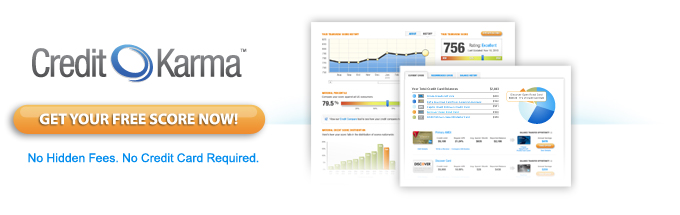
    Through our partnership with Credit Karma, Debtmerica is proud to offer our users credit scoring and credit monitoring that is really, well, FREE. For the first time you can get a truly free credit score with no hidden costs, no obligations, and no credit card required.

    This same level of service is something that less reputable firms have tricked users into signing up for in the past, offering “free*” credit reports which come with a bunch of fine print suckering folks into ongoing monthly fees. But Credit Karma is completely free. Not freemium, free. There are no monthly services or paid upgrades.

    Register a Credit Karma account today and you’ll get the following absolutely free:

    My Score

    Access your credit score free of charge and track your credit over time. Compare your score against all US consumers and see how lenders view your creditworthiness.

    Credit Monitoring

    Credit Karma now monitors scores on a nightly basis, letting you know of anything derogatory that may impact your credit, or even just a change in your personal information at the credit agency.

    Credit Report Card

    View a simple, straightforward snapshot of your credit report. The information provided will help you better understand the key components impacting your credit score.

    Credit Compare

    See how your credit score compares to other consumers in your state.

    Credit Simulator

    This simulation tool allows you to plan ahead to see how financial decisions, like applying for a loan or closing a credit line, may impact your credit score.

    Custom Offers

    Discover savings opportunities for your credit cards, mortgage, auto loan and more. Offers update each time you log in and are unique to your financial needs.

  • Cash Back Programs Linked To Increased Credit Card Debt

    Cash Back Programs Linked To Increased Credit Card Debt

    Debt Consolidation

    It’s always hard to resist the rewards that are often associated with credit cards. If you earn 1% cash back, wouldn’t it be logical to use your credit card more than other methods of payment?

    An article on gulfnews.com points out that financial experts have noticed that “reward schemes are not really worth it because the value of the incentives rarely offsets the amount spent by the cardholder.” When people have the opportunity to save, they lose sight of the goal and actually end up getting in credit card debt.

    This isn’t to say every person with a credit card that has a rewards program is putting him or herself into debt. When used carefully, they can be an added bonus.

    Many credit card companies rely on rewards programs like cash back to make money. The incentive increases credit card purchases, and keeps many customers in debt. Managing partner at Holborn Assets, Steve Gregory says, “Used unwisely, they create more profit for banks than any of their other retail banking activities.”

    Don’t fall victim to cash back programs. The incentive to earn cash back is not worth the debt that it can cause.

    For help getting out of debt, contact us today.

  • 2012: plan for the year ahead

    The New Year is an ‘obvious time for a financial review’. That’s the basic point of a new press release from Think Money, which advises people on a few steps they could take at the start of a New Year to help them make sure they stay in control of their debts.

    As it points out: “many of us will be entering the New Year with a lasting souvenir of last year, in the form of credit card bills and other debts.”

    Ideally, we’d all like to be debt-free this time next year. If that’s not really an option, we’d like to see the amount we owe shrinking, and the press release suggest a few ways people in different situations could go about achieving that – starting with a good review of their financial situation.

    An ‘action plan’ that could work for people with spare money involves overpaying those debts: paying more every month than they actually have to. This can get borrowers out of debt more rapidly, and can seriously cut down on the amount of interest they’ll pay on the debt, because the interest just won’t have as long to accrue on it.

    Then there are the people who might benefit from debt consolidation – people who are repaying multiple debts, which means they’re dealing with multiple lenders and making multiple monthly payments. Someone in that situation might find their finances are a lot more straightforward if they bring all those debts together into a single loan. In general, the quicker they repay that loan, the less they’ll pay in interest.

    Then there are people who sit down to look at their finances and find that they’re likely to struggle with their debts in the year ahead. This can be a really difficult situation to be in, but a good way for people to start dealing with it is simply to talk to their lenders and find out how they’d advise them to go about it.

  • New Federal Bureau Helps Consumer Debt Relief

    There’s a new sheriff in town. It’s the Consumer Financial Protection Bureau (CFPB). And it was created about a year ago to ensure that financial products such as credit cards and loans work better for consumers who need debt relief.

    According to the 2012 report “Consumer Financial Protection Bureau 101: Why We Need a Consumer Watchdog,” nearly 20 million Americans use payday lenders. Additionally, there is about $1.2 trillion in delinquent consumer debt. Here’s what else the CFPB cites:

    • One in five Americans over the age of 65 has been victim of a financial scam
    • 50% of claims against debt collectors cite harassment
    • The default rate on subprime mortgages issued in 2006 exceeds 50%

    What does the federal government hope the Bureau will be able to do? The CFPB offers three things:

    • Education. To provide consumers with the ability to compare the “costs, benefits, and risks of different products effectively—and to use that information to choose the product that is best for them. Fine print and overly long agreements can make it difficult for consumers to understand and compare products.”
    • Enforcement. Specifically, the Bureau offers federal consumer financial protection laws that restrict unfair, deceptive or abusive acts or practices against consumers.
    • Research. The Bureau takes consumer complaints, researches consumer behavior and monitors financial markets for new risks.

    Because many consumers are confused about the Bureau’s work, the government put together answers to some of the more frequently asked questions.

    We can help you with your questions as well. If you need debt relief, we can help you reduce your debt for one low monthly program payment. Contact us and we’ll explain how.