Blog

  • Go Back-To-School Without Going Back-To-Debt!

    Go Back-To-School Without Going Back-To-Debt!

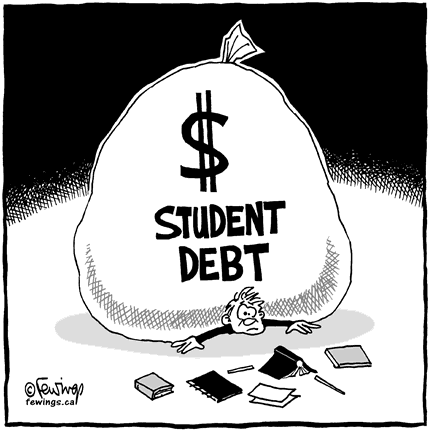
    Now that summer is coming to a close, it’s time to get the school bags out and head back to classes. Whether you’re heading off to college or sending the little ones off to school, this time of year could get quite costly. Back to school shouldn’t mean back to debt! Here are the top five ways to avoid debt during the start of classes!

    Budget by the book!

    Whether you’re going off to college or preparing to get back into the school routine, you may want to keep track of all your spending. It is easy to overspend this September, what with all the school supplies,class trips, and clothes to pay for. Use a notebook to keep track of your spending each week. If you could visually see your spending habits on paper, you’re less likely to overspend each month.

    Avoid those ‘visitors’ on campus!

    New college students are targeted each fall by credit card companies that visit campuses. Credit card representatives hang around the student union or popular hang-out spots on campus in order to sell students a fancy new card with many student “perks.” Don’t fall for the trap! Many of these cards may come with bonus gifts, but having another credit card only means more ways to spend money!

    Apply to bursaries and scholarships!

    Many colleges offer students scholarships or bursaries, or other financial awards. Sometimes, these go unclaimed as students aren’t even aware of them. Speak to your financial aid officer and do some research on awards that you could apply for on and off-campus. You’d be surprised about the number of awards up for grabs!

    Use your student discounts

    Your student card may save you a few dollars on transportation and food. Many student unions even offer discount cards that can save you a couple of bucks at many restaurants and retailers. Use your student card to your advantage when you go shopping. Remember, a penny saved, is a penny earned!

    Plan ahead and plan often

    Planning ahead is your best defense against debt. Besides budgeting each month, use your student planner, phone, or electronic calendar to send yourself reminders on bill payments due dates. You have enough to remember while you’re studying, so planning ahead and setting future reminders for yourself is a great way to stay on top of your payments and avoid debt!

  • Debit card fees coming for Bank of America customers

    Debit card fees coming for Bank of America customers One of the nation's largest credit card lenders will begin charging a monthly fee to consumers who want to use its branded debit cards, and some consumer advocates say it may be difficult to afford for those who have had trouble trying to reduce debt.

    Bank of America recently announced plans to begin charging $5 per month for debit cards used to make purchases, and a number of other large financial national institutions including JPMorgan Chase and Wells Fargo are likely to follow suit, according to a report from the Wall Street Journal. The change comes in response to heavier federal regulation that the banking industry says will cost it as much as $6.6 billion annually. Bank of America estimates about $2 billion of that total will be from its revenues.

    But consumer advocates are concerned about the changes because it will affect only customers with standard checking accounts, not those on premium accounts held by more affluent customers, the report said. That's because the accounts for wealthier bank customers tend to be more profitable to the bank than those with lower balances, and they are therefore exempt from nearly all fees Bank of America charges. The new fees go into effect October 1.

    "I'm not making business decisions for [Bank of America], but I can only say from a consumer perspective, consumers are tired of being nickel and dimed," Norma Garcia, a lawyer for advocacy group Consumers Union, told the newspaper.

    Both Wells Fargo and JPMorgan have been or soon will test their debit card fees as well, the report said. Beginning on October 14, select Wells Fargo customers in Nevada, Washington, Oregon, New Mexico and Georgia will be hit with a $3 fee for any month in which they use their debit card to make purchases. JPMorgan has been testing a $3 charge for debit card use in Wisconsin since February.

    Among the new rules against which banks are rebelling is one that placed a limit on the amount banks could charge to businesses for processing debit card purchases. The Federal Reserve Board recently limited this fee to just 21 cents per transaction, down appreciably from the current average of 44 cents per purchase, but higher than the 12 cent limit that was originally proposed.

  • Federal consumer credit card protections meet resistance

    Federal consumer credit card protections meet resistance Consumers who are attempting to rebuild their credit and find greater financial flexibility by increasing their ability to take on credit card debt may still be faced with higher upfront fees for opening an account as a result of a U.S. District Judge's Ruling.

    Judge Karen Schreier recently placed a preliminary injunction on a rule from the Federal Reserve Board over the upfront fees credit card lenders charge to riskier customers when they open new accounts, according to a report from the Sioux Falls Argus Leader. The institutions that filed the suit, First Premier Bank and sister company Premier Bankcard, claimed that the Fed's rule would cost them more than $1 million per month and wanted clarification on how it could charge subprime borrowers as a means of mitigating risk.

    "First Premier has sufficiently demonstrated that it is 'likely' to succeed on the merits of its claim because the board acted in excess of its statutory authority," Schreier wrote in her decision, according to the newspaper.

    Many consumers who worked to reduce debt may now be in a position where they want to open new credit card accounts to increase their financial flexibility, but high fees may not allow them to do so.

  • Capital One says credit cards still prioritized

    Capital One says credit cards still prioritized Some experts have expressed concern over the way that one of the nation's top handlers of credit card debt is attempting to take over a major online banking business, but the lender says its focus will remain on issuing cards.

    Capital One Financial says that its recent move to acquire ING's U.S. online banking unit will not affect its credit card accounts, according to a report from Reuters. In addition, the lender believes that because the credit card market has shrunken over the last few years – the size of its portfolio has dipped 25 percent since 2008 – the move will have little impact for the broader economy.

    "This product diversification, combined with our conservative and industry-leading underwriting capabilities, helped make us one of only two credit card businesses not to lose money in any quarter during the Great Recession," John Finneran, general counsel for Capital One, told the Federal Reserve Board, according to the news agency.

    Consumers have also been working rigorously to reduce debt and curb instances of delinquent and defaulted accounts in the months since the recession ended, putting the company and others like it on better financial footing.

  • Consumer credit card data still at risk due to weak protection

    Consumer credit card data still at risk due to weak protection The number of companies who met standards designed to ensure that consumers were not hit with fraudulent credit card debt neither shrank nor grew in 2011, a new study found.

    Just 21 percent of organizations surveyed reportedthat they completely met the Payment Card Industry Data Security Standard, a baseline for protecting consumer credit card information so that it's not compromised in a data breach, according to the latest annual Verizon Payment Card Industry Compliance Report. This is considered especially troublesome by security experts because a lack of compliance is often directly linked to data breaches that expose consumers' financial details and cause credit problems.

    "We had hoped to see more organizations complying with the PCI standard, since we believe that compliance will ultimately improve the security posture of organizations and in all likelihood lead to fewer breaches," said Wade Baker, director of risk intelligence for Verizon. "By reviewing this report, organizations can see where to focus their efforts and implement our recommendations for helping to accelerate PCI compliance. Our end goal is a safer credit-card environment for consumers and businesses."

    Among the most common problems companies had in meeting PCI DSS requirements were in the areas of protecting stored cardholder data, tracking and monitoring access to this information, regularly testing systems and processes and maintaining security policies, the report said. The most common probable reason for these failures is likely that becoming compliant is often difficult, though overconfidence in security systems and complacency may also be to blame. Further, some companies may also have other security considerations or issues on which they are focusing.

    Verizon also recommended a number of ways for businesses to become compliant, the report said. For example, it may be a good idea to begin treating compliance as a daily process that can be improved upon every day, and putting a security official in charge of making sure the company is getting up to speed is one way to ensure that progress is being made. It may also be helpful to use a third party to help verify that compliance standards are being met, as there could be conflicts of interest that can arise with self-validation.

    Millions of Americans have their personal, medical and financial information exposed in data breaches, resulting in a greater risk for fraud and identity theft to be committed using their credit card information.

  • Discover sees profits more than double with delinquency declines

    Discover sees profits more than double with delinquency declines The rate at which consumers fell so far behind in paying down their credit card debt slipped appreciably in the third quarter for one of the nation's largest lenders as Americans took more steps to reduce debt.

    Discover Financial Services recently said that it saw profits more than double on a year-over-year basis during the third quarter of the year as it dealt with more card use by consumers and fewer delinquencies and defaults, according to a report from the Wall Street Journal. Card sales volume climbed 9 percent to a record $26.3 billion in the three-month period, while its delinquency rate slipped to 2.43 percent, a 25-year low.

    "We achieved record results again this quarter as a result of further improvements in credit performance and record sales volume," said David Nelms, chairman and chief executive, told the newspaper. "We think we're back in growth mode so I would hope that we can sustain a year-over-year growth rate in receivables going forward."

    Many of the nation's top lenders have seen instances of both delinquency and default drop considerably in the last year, leading to higher profits for nearly all of the banking industry.

  • Will consumers be hit with higher prices for credit card purchases?

    Will consumers be hit with higher prices for credit card purchases? The Durbin Amendment to the Dodd-Frank Act was designed to help protect consumers, but may end up resulting in higher costs for making credit card purchases.

    The Federal Reserve Board recently capped the amount payment processing networks could charge businesses for accepting debit transactions, but now these networks are likely to boost the fees for credit purchases to make up the lost revenue, according to a report from the consulting firm Ideal Cost. As a result, consumers may face more credit card debt as a result of merchants charging more to accept credit purchases.

    "The Durbin Amendment touted itself as the end-all of all unreasonable merchant fees," said Robert Livingstone, president and founder of Ideal Cost. "Whether it was poorly drafted to purposely support only certain industries or miswritten completely by accident, it will result in harming American merchants. In this economic climate merchants are burdened with rising costs in almost every other aspect of their business. The last thing that they need is an unsubstantiated rate increase."

    Higher prices may make it more difficult for consumers to reduce debt, and as such, it's important for Americans to keep an eye on their spending to ensure they're being responsible.

  • Consumers continued to suffer fewer credit card defaults in August

    Consumers continued to suffer fewer credit card defaults in August The rate at which consumers allowed their credit card debt to be passed on to collections by their lenders after repeated failure to pay their bills fell once again in August.

    The national credit card default rate slipped inAugust to a rate of 5.26 percent of all balances, down significantly from July's rate of 5.64 percent, according to the latest monthly statistics released jointly by S&P Indices and the credit monitoring firm Experian. That rate is also down considerably on a year-over-year basis, as credit card defaults stood at 7.87 percent of all balances in August 2010.

    Meanwhile, consumers also had a better time getting out of debt problems for other loan types in August as well, the report said. The composite default rate for all types of credit slipped to 2.04 percent, down slightly from July's 2.06 percent, but significantly from August 2010's rate of 3.32 percent.

    Some experts caution that while credit card defaults have fallen considerably over the last year, increased rates of spending in recent months might lead to an increase as cash-strapped consumers struggle to pay higher bills.

  • Number of consumers dealing with more debt falls to low

    Number of consumers dealing with more debt falls to low Many consumers have worked hard in recent months to reduce debt loads, and a new poll finds that many have been successful.

    The total percentage of consumers who say they are carrying more debt now than they were at this time last year slipped to 23 percent, according to a recent Rasmussen Reports survey. That's the lowest total observed since the company began keeping track of these statistics in April 2009. Meanwhile, 37 percent say they now owe less money than they did a year ago, up from 31 percent in the previous poll. Finally, 36 percent say they owe about the same.

    Meanwhile, most Americans have seen the interest rates they pay on their debts either hold steady or decrease, the report said. Just 21 percent of consumers believe they're paying higher interest rates these days, while 56 percent say they're the same and 17 percent think they're lower.

    However, recent economic troubles have forced many Americans to begin taking on credit card debt once again to make ends meet, which could be problematic for those who do not pay their balances in full every month.

  • Consumers’ credit card debt rises again on higher spending

    Consumers' credit card debt rises again on higher spending Recent data shows that consumers are once again spending more money on their credit cards, leading to higher debt levels, the likes of which haven't been seen since the recession ended.

    The latest 2011 Credit Card Debt Study from the consumer comparison site CardHub.com revealed that consumers added $18.4 billion in credit card debt during the second quarter, up 66 percent from the same period in the previous year, and 368 percent more than 2009's second quarter, according to a report from Daily Finance. Americans are expected to end the year with $54 billion more owed on their credit cards than they started with, potentially leading to renewed credit problems.

    "A debt increase of $18.4 billion during a single quarter is mind boggling, especially when you consider that this increase is 368% higher than what we witnessed in the same quarter two years ago," says Odysseas Papadimitriou, CEO of CardHub.com, told the site.

    Many consumers have been forced to begin using their credit cards more often in the last few months as a result of rising prices for necessities coupled with stagnant wages and unemployment figures.