Blog

  • More consumer credit card use expected during holiday season

    More consumer credit card use expected during holiday season Most consumers tend to spend more when the holidays roll around, and now a greater number will take on credit card debt when shopping online, instead of using their debit cards.

    Consumers who are generally feeling better about their finances in the wake of the recession are more likely to use their credit cards than they have been in the past few years, and online purchasing ahead of the holidays will likely see an even greater shift toward that payment method, according to the latest Online Retail Payments Forecast from Javelin Strategy and Research. In addition, they will likely spend more on their credit cards to make a single purchase than they would with debit.

    The average online credit card purchase now amounts to $82.10, while the average debit transaction costs $58.29, the report said. This type of spending is also incentivized with promotions like those seen on Cyber Monday, when prime deals tend to entice consumers into spending more than they likely planned.

    It can be hard for consumers to reduce debt around the holiday season, but sitting down and creating a budget before doing any shopping, and then sticking steadfastly to it, can be extremely helpful.

  • Consumers cut household debt in third quarter

    Consumers cut household debt in third quarter In the past few years following the onset of the recent national recession, millions of consumers became more conscious of trying to reduce debt in a number of ways. And now, even as the economy continues to improve in the wake of the economic downturn, many are still continuing those efforts.

    The nationwide amount of debt owed by consumers to lenders for everything from credit cards to education loans and mortgages dropped 0.6 percent in the third quarter of the year to a total of $11.66 trillion, according to the latest Quarterly Report on Household Debt and Credit issued by the Federal Reserve Bank of New York. That's down from a total of $11.72 trillion at the end of the second quarter.

    A large portion of that decline is attributable to drops in mortgage balances, which fell $114 billion between July and September, the report said. That's down 1.3 percent from the second quarter of the year, but the total amount of non-real estate debt rose by roughly the same proportion to a total of $2.62 trillion.

    That change came even as the total amount consumers could potentially carry in credit card debt dipped $25 billion during the third quarter, in part due to the closing of 6 million previously open credit card accounts, the report said. Now, consumers have a total of 383 million credit cards open nationwide, though that total is down about 23 percent from the all-time peak observed in the second quarter of 2008. In addition, the amount owed on those cards is 20 percent below the high set in the fourth quarter of 2008.

    But at the same time, consumer demand for new credit cards – when viewed as the amount of new inquiries within a six-month period – rose for the second quarter in a row, the report said. However, the overall delinquency rate across all types of credit rose to about 10 percent as of the end of September, up from the 9.8 percent observed in June.

    However, some experts say that lenders have seen delinquency rates rise in recent months more as a result of the all-time lows that have recently been hit being largely unsustainable going forward, rather than a return to riskier borrowing habits by consumers.

  • How will holiday spending affect credit card bills?

    How will holiday spending affect credit card bills? Millions of consumers will likely turn to credit cards to cover at least some of their holiday shopping expenses once again this year, but what will it ultimately cost them?

    There are a number of factors for borrowers to consider when thinking about how to most effectively use their credit cards for holiday shopping, according to a report from Investopedia. For example, the higher their interest rate, the less money they should probably spend, with regard to spending totals that exceed the borrower's ability to pay the entire balance down in one billing cycle.

    It may also make sense for consumers to look at the credit cards in their wallets that offer the most rewards, the report said. This can help to cut down the overall cost of borrowing, particularly if the rewards they earn come in the form of cash back, rather than airline miles or points.

    Experts recommend that keeping spending on credit cards to a minimum will help consumers to stay in a strong position to reduce debt going forward.

  • Rewards programs still expanding for good credit consumers

    Rewards programs still expanding for good credit consumers While many consumers have made considerable efforts to reduce debt and more conscientiously handle their credit card debt and spending in recent months, more lenders are nowexpanding the value of their rewards offers in an effort to attract new borrowers.

    Consumers who have strong credit ratings have likely seen the value of the rewards offers they receive in their mailboxes increase significantly over the past few months, as more of the nation's top credit card lenders compete to draw in new and more creditworthy borrowers, according to a report from the Baltimore Sun. One tactic many of these lenders are taking is to grant consumers a significant amount of rewards up-front – usually the equivalent of if they had spent thousands of dollars on their card – and then doubling that total once certain spending thresholds are reached.

    Recent research by the marketing firm Synovate found that the value of these offers has been on the rise even as the number of rewards mailings sent to consumers has slipped between June and September, the report said. However, that may be because these most generous offers are only being made available to consumers who have FICO credit scores of between 750 and 850 – the best consumers can achieve. Many of these offers may also be available to consumers who have ratings of between 700 and 749, but they will also likely pay higher interest rates on the accounts than those whose credit ratings are top-notch.

    Of course, these cards generally have higher interest rates than do accounts that come without rewards programs attached, and any consumers signing up for one may find that there is also an annual fee attached, the report said. For this reason, it may be a good idea for consumers to carefully review any lending agreements they may receive to make sure that an account will work for them. For example, if the size of their annual fee will be larger than the amount of rewards they would earn on their account given their normal spending habits, that account might end up costing them money every year.

    In addition, it makes sense to check and make sure opening the account will be a good idea simply given the borrower's current financial situation.

  • Consumers returning to credit card use in big way

    Consumers returning to credit card use in big way Consumers seem to be more comfortable dealing with credit card debt once again these days, as the number of new cards issued to borrowers has grown significantly in the first eight months of the year.

    Banks and retailers alike vastly expanded their credit card issuing efforts between January and August, leading to a surge in new accounts, according to the latest National Credit Trends Report from Equifax. In all, the number of new credit cards from banks grew 25 percent, jumping to 25.3 million from the 20.2 million in the same period last year. Meanwhile, those from retailers climbed 7 percent to a total of 21 million from last year's 19.7 million.

    One reason for this might be that banks have dramatically increased issuing efforts where subprime borrowers are concerned, the report said. The number of bank credit cards issued to consumers with credit scores below 600 climbed 56 percent on a year-over-year basis.

    Credit card borrowing is also expected to grow in the next month or so as consumers make a greater effort to wrap up their holiday shopping, and retailers will attempt to take advantage of this seasonal shift by offering more accounts.

  • Rewards programs expanding ahead of holidays

    Rewards programs expanding ahead of holidays In an effort to draw in more consumers, many of the nation's largest lenders are now increasing the rewards cardholders can earn for every dollar of credit card debt they take on during the holiday season.

    Offers for rewards points and cash back credit cards are becoming more generous as the holidays approach, according to a report from USA Today. Increased competition for top borrowers coupled with consumers' tendency to spend more on their credit cards during the final months of the year has led many to incentivize more spending.

    For example, Discover is boosting cash back rewards between 5 and 10 percent for shopping done at certain retailers through its ShopDiscover program, the report said. Meanwhile, American Express is giving out five times as many points for purchases made through certain retailers such as Apple and Target, as well as discounting the cost of rewards points redemption for certain items.

    Often, consumers spend more on their credit cards during the holiday season than they should, making it difficult to reduce debt and increasing the problems they may have in paying their bills.

  • Debt collection company barred from Colorado

    Debt collection company barred from Colorado A company that specialized in collecting bad debt from consumers has been ordered to stop operating in Colorado.

    The order bars Regent Asset Management Solutions and its chief executive officer, Michael A. Scata, from engaging in debt collection, for which it was not licensed, according to an announcement from state Attorney General John Suthers. In addition, the company must also pay the state $70,000 in civil penalties for violating the Colorado Consumer Protection Act.

    The decision is the result of a December 2010 lawsuit that alleged the company collected debts from consumers in the state even after its license to do so expired in July of that year, the report said. Further, Regent also failed to provide consumers with adequate proof that they owed the debts it was trying to collect, often leaving them unable to determine the accuracy of the claims being made against them.

    A number of debt collections agencies have been shut down by authorities across the country in recent months as a result of illegal collection methods. This underscores the importance of consumers knowing their rights when it comes to dealing with this type of company.

  • Consumers more satisfied with credit cards these days

    Consumers more satisfied with credit cards these days Though many consumers may have had issues dealing with their credit card debt in the past, that's not as much the case these days, and the vast majority are now satisfied with their lender.

    Consumers are generally pleased with their credit card accounts these days, as just 12 percent reported that they feel as though a lender has treated them unfairly, according to the latest annual study from the Consumer Reports National Research Center. That's down from 14 percent last year and 22 percent in 2009.

    In addition, lenders are now more willing to extend credit to prospective borrowers, the report said. This year, only 14 percent of those surveyed were denied a credit card, down from 24 percent last year.

    However, 35 percent also noted that they have seen a new annual fee, higher interest rate, lower credit limit or restrictions on either redeeming or accruing rewards placed on their cards this year, the report said.

    Changes such as these may make it difficult for consumers to reduce debt, particularly if they have a habit of carrying some of the balance they accrued over from one month to the next.

  • Purpose Driven Debt

    Purpose Driven Debt

    Purpose Driven Debt

    We are all aware that America’s appetite for too much personal debt ran our economy into the ground recently. Since the great banking collapse of 2008 we have been bombarded with the message that taking on any type of debt is a downright bad idea. In fact, the very four letter word, D-E-B-T, now carries a stigma that stinks like rotten eggs. But as with any cycle of mainstream culture, our views towards debt may have deviated well past a fair trial. In fact, given the awful reputation that personal debt has these days, the jury is out on whether it could actually be an undervalued asset worthy of a second chance.

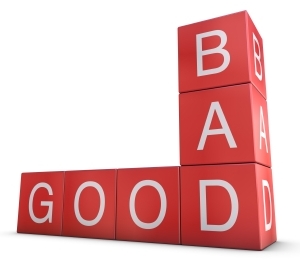
    While taking on too much personal debt is generally considered toxic towards our financial well being, there are many cases where taking on debt is useful, sensible and can even be very rewarding. This blog challenges some of these negative preconceived notions towards debt and presents some positive reasoning behind spending decisions that help clarify the gray line between “Good Debt” and “Bad Debt.”

    Debt may be considered good and beneficial when its use has the right motivational drivers behind it. Debt with a good purpose can help a small business grow and earn more money, it can improve a family’s quality of life or health, or it can secure one’s education or professional vocational skills. Debt is bad and strenuous when it has no constructive purpose. Bad debt is generally taken on for short-term gratification, carries little opportunity for gaining value in the long run, and often comes with ugly terms. Being able to differentiate between purpose driven debt and gratification driven debt is key to using debt as a tool for success, rather than falling through the trap doors.

    Regardless of what type of spending we do, most of us will come to a crossroads where we decide whether a purchase is worth the obligation to pay it back. The more rational side of us will ask, “Do I really need this”, and “is it really worthwhile?” and the more gratification driven side of us, might conclude, “I deserve this” or “It shouldn’t take me that long to pay off.” The following are specific drivers of debt that have a good motivation and honorable purpose, often aiming to enrich one’s overall circumstances or quality of life:

    Family and the Hearth

    Investing in the foundation and future of your family’s well being is a wonderful purpose for considering debt, as long as the terms of the loan are stable and well within budgeted means. One of the first major purchases a married couple makes together is investing in a home for their growing family, where a mortgage is often obtained to secure the property. Another big purchase families make together is a family car to transport children to and from school and activities. Accessing an auto loan to buy a reliable and safe vehicle can greatly improve convenience and mobility for the family.

    Career and Your Business

    Your business or job is one of your major sources of income, thus it is important that you invest money into maintaining it and growing it when possible. Taking out a loan to start or expand a business with the intention that you will be making more money than you will be paying for the loan is an example of debt driven by a sensible purpose. Sophisticated companies are constantly borrowing to grow and make strategic investments. These same principles apply to individuals and entrepreneurs with the experience and know-how to advance their careers and businesses.

    Education and Learning

    Most people take out a student loan to finance their college tuition. A higher education degree should result in more career opportunities and a higher income level down the road. Purchasing tickets to a conference to educate oneself on a certain topic or borrowing to enroll in a vocational training course are examples of debts that are used to help secure one’s professional standing and income. Also, investing in your child’s education and hobbies is another example of purpose driven debt with long lasting benefits.

    Protection and Security

    Insurance is a great example of a product that provides different types of protection and is generally financed to some degree. Different types of insurance plans provide protection for one’s family, income, car, life, and home. We often have the option of laying down a big up-front premium payment to cover such protection for multiple months or years in advance. Choosing the full premium payment is simply not realistic for many families, and so taking on a monthly payment obligation to support these protective products just makes sense, as long as the terms are reasonable.

    Health and Wellness

    One of the most important things to consider is your health and wellness. Gym memberships improve your quality of life. When people work out they feel good, they are more productive at work, and exercise may even improve their personal relationships. Also, taking on debt for medical solutions, such as a vital treatment for a loved ones health, is priceless. You can’t place a dollar sign on someone’s health or life!

    Although this blog is meant to change your perspective on the dreaded four letter word D-E-B-T, its intention is not to encourage readers to falsely justify frivolous spending. Unless you have a large bank account with a lot of C-A-S-H you need to consider the motivations and drivers behind each purchase. The key message here is to remember that whether we are making short term or long term spending decisions, we need to evaluate the purpose behind the particular purchase we are making, and examine the future benefits of the bounty.

    So, whether you are at the check out counter ready to whip out your credit card to purchase that new pair of leather shoes or you are at the bank ready to sign on that dotted line to purchase a new home, remember to ask yourself these questions, “What am I trying to accomplish by bringing on this debt?” “What purpose am I trying to achieve over the short term or long term with this debt?” and “Are the terms of the debt I am taking on sensible and conducive to enriching my overall financial plan?”

  • Surprise! 1 percenters have credit card debt, too

    Surprise! 1 percenters have credit card debt, too

    Income isn’t the only thing that separates the “1-percenters” from the rest of us.

    As it turns out, the wealthiest of the wealthy — now at the center of coast-to-coast political protests by the Occupy Wall Street movement — also seem to manage their credit better, according to the Huffington Post.

    Though America’s richest households (those earning $344,000 a year or more as of 2009) make 225 times more than the average median household, they also rely heavier on credit than the remaining 99 percent of the country. But because they manage their credit card debt better, the 1-percenters’ average credit score is 704, as opposed to the 99-percenters’ average of 637, the Post reports.

    Higher scores — which are earned by paying bills on time and avoiding collection agencies, as well as maintaining a balanced credit portfolio — mean better rates and access when it comes to loans or new credit cards.

    And in the long run, that might help reduce the income gap.

    Meantime, the lesson for most of us is this:

    Money alone doesn’t give you a higher credit score. It’s how you manage the money you have.

    That’s where we come in. Contact us — we can help you resolve your debts and regain your financial balance.