Category: Articles

  • Reduce Unsecured Debt

    Reduce Unsecured Debt

    Many consumers across the country are struggling with their large monthly payment obligations, and are having difficulties even affording the necessities they require to live comfortably. Some are unable to continue to pay their bills on time and are falling behind on their payments for their unsecured debt.

    For many consumers, the most difficult types of debt to keep current with are their unsecured debts, mainly their credit cards, medical obligations and personal loans. Unsecured debts are obligations that are not supported by collateral and typically have higher interest rates. Secured debt, on the other hand, is debt that is backed by an asset, such as a home or a car. With secured debt, a creditor can often repossess the collateral if a consumer fails to make payments, and hence the interest rates are lower.

    For consumers that are aiming to reduce how much unsecured debt they carry, there are a number of options. Consumers that are carrying several unsecured debt obligations with high interest rates can apply for a debt consolidation loan, in which a bank issues a new loan for enough money to pay off all their outstanding debt balances at once. However, consolidation loans can be difficult to qualify for because they often require a high credit score and sufficient income levels. For consumers that are approved, they can consolidate their debt into one single monthly payment at a lower interest rate. If consumers choose to pay more towards their principal balance every month than the minimum payment, they can get out of debt more quickly.

    Another alternative for consumers to reduce unsecured debt is to seek a debt settlement or debt negotiation company that will work with their creditors to structure settlements at a reduced balance. While creditors may not normally consider settling if a consumer inquired directly, debt negotiation firms have relationships with the lenders to help structure these reduced settlements. Lenders would rather receive a partial payback of the balance they are due, rather than risk receiving no payment at all.

    Debt negotiation Companies can typically reduce debt by somewhere between 40 and 60 percent of what is owed at the time of settlement. The challenge to this method is that it requires a consumer to have accumulated sufficient savings to make the settlements, which many consumers might not have readily available. Hence, it is very important that individuals find a good debt settlement company that helps them save money from the outset of the program, and thereby represents their best interests.

    [av_button label=’Get Quote Now’ link=’manually,/’ link_target=” size=’medium’ position=’center’ icon_select=’no’ icon=’ue800′ font=’entypo-fontello’ color=’theme-color’ custom_bg=’#444444′ custom_font=’#ffffff’ av_uid=’av-8ni2b’]


  • Eliminating debt

    Eliminating debt

    Many consumers may have found themselves deeply in debt over the last few years, as the economy sunk into a serious recession. A large number of Americans lost their jobs or had their hours cut back at work, forcing them to pay for more necessities on credit cards. Others may have found themselves with unforeseen debt due to hardships such as divorce or medical emergencies.

    Whatever the reason, many people are looking for sensible ways of reducing and eventually eliminating debt. Fortunately for those struggling with unmanageable debt, there are a number of options available, each having their own benefits and drawbacks.

    Many consumers initially explore consolidating their debt, whereby a bank issues an individual a new loan that pays off all their current debts and carries a considerably lower monthly payment than one would typically have with credit card lenders. This method may not eliminate debt instantly, but it can certainly help to lower monthly payments and rates, which allows consumers to pay off their total balance more quickly. It can also simplify the payment process by reducing several monthly payments into one. However, consolidation loans can be very challenging to qualify for since they often require that the borrower has superior credit, thereby making this option of eliminating debt much more difficult to attain.

    Consumers that find themselves so deep in debt that they are falling behind on their payments may not think there is any hope of eliminating debt unless they file for bankruptcy protection. However, filing for bankruptcy can be an emotionally tolling process and is often considered the option of last resort. There are two kinds of bankruptcy that are available for consumers to file for: Chapter 7 and Chapter 13. Chapter 7 bankruptcy protection eliminates an individual’s debt completely, although it is difficult to qualify for and can require a consumer to divest some or all of their assets to pay off creditors. Chapter 13 bankruptcy requires an individual to pay back a percentage of their debts, typically over a 3 or 5 year repayment plan, and a trustee distributes those payments back to the individuals creditors. Both of these bankruptcy types can seriously impair an individual’s credit score and credit profile, and make it extremely challenging for an individual to secure any kind of favorable loan for years.

    For those consumers that are struggling with debt but would like to avoid bankruptcy, there is a solution that offers a middle-ground to these alternatives and can be very effective. Debt settlement, also known as debt negotiation, is the process of negotiating with creditors to achieve a payoff amount that is a substantial reduction to the current balances that are owed. Creditors are very willing to negotiate on debt balances that are in arrears, because if a consumer were to file bankruptcy, they stand to get nothing. In order to succeed in such a program, consumers need to diligently save the funds that are required to make settlements, which typically run between 40 and 60 percent of the total current balances. Consumers can try to negotiate with their lenders on their own or they can hire the help of a professional company. There are pros and cons to both – but a good debt settlement company can achieve results for consumers that are more favorable than what they could otherwise arrange on their own.

    When consumers look for the best way to eliminate their debt quickly, they should explore all of their options and make sure to do their due diligence on the companies offering the various solutions for eliminating debt. While no process is going to be easy, there are great companies offering successful solutions that are very worthwhile.

    [av_button label=’Get Quote Now’ link=’manually,/’ link_target=” size=’medium’ position=’center’ icon_select=’no’ icon=’ue800′ font=’entypo-fontello’ color=’theme-color’ custom_bg=’#444444′ custom_font=’#ffffff’ av_uid=’av-bf7kh’]

  • Credit Card Consolidation

    Credit Card Consolidation

    Consumers across the country have continued to take on an enormous level of credit card debt over the last few years, as so many Americans have struggled to make ends meet in light of the recession and lack of available jobs in the economy.

    With so much debt, consumers often attempt to spread their important purchases across a number of creditor accounts to avoid approaching credit limits and higher interest payments. However, this recurring process can create additional problems, leaving already-strapped consumers with the challenge of juggling multiple accounts. The pressure of keeping track of and paying off several high credit card bills per month can easily spiral out of control.

    Many of those consumers may have heard about companies that can consolidate their credit card debt into one low, monthly payment and wondered if it was possible. Credit card consolidation is a viable solution for many, and it is a simple process that can serve to reduce the hassles of dealing with several credit card companies at once. In addition, the strategy often lowers monthly payments, and in doing so, reduces the total payback of principal and interesting over the life of the loan.

    When a consumer applies for credit card consolidation, what they are actually doing is receiving a new loan from a lender to pay off all their credit card debt, and oftentimes other types of debt such as automobile or student debt. This way, the consumer only has one loan going forward with one manageable monthly payment. An added benefit of credit consolidation loans is that rates on them are typically considerably lower than those on credit cards. This means that consumers will save more over the life of the loan, especially if they are conscientious about making monthly payments above the minimum levels.

    This credit strategy should not be confused with consolidating several balances into one new credit card account, or simply transferring balances from card to card. Even if there is a low introductory rate on a new card, the canceling of several credit card accounts on top of opening a new one, can instantly damage a consumer’s credit score. And once the introductory rate expires, the consumer is still stuck paying off the high-interest rates they were trying to avoid.

    For those than can qualify, credit card consolidation is a legitimate and practical way for a consumer to lower their monthly payments, avoid high-interest credit cards, and considerably reduce their financial problems.

    [av_button label=’Get Quote Now’ link=’manually,/’ link_target=” size=’medium’ position=’center’ icon_select=’no’ icon=’ue800′ font=’entypo-fontello’ color=’theme-color’ custom_bg=’#444444′ custom_font=’#ffffff’ av_uid=’av-9tm9k’]

    ADNFCR-3590-ID-19907973-ADNFCR

  • Debt Consolidation Programs

    Debt Consolidation Programs

    Many consumers have found themselves up against significant amounts of debt spread across a handful of creditors over the last few years. They may have heard about debt consolidation programs that promise to consolidate debt and reduce monthly payments, while wondering how they work and whether they can deliver positive results. The good news is that many programs of this kind do deliver meaningful benefits, and what they accomplish is actually fairly simple.

    Debt consolidation programs give qualified consumers a new loan that pays off several or all of their outstanding obligations. This new debt consolidation loan, by aggregating all of the individual debts and paying them off, often becomes the only loan that the consumer holds and makes payments to.

    A loan from a debt consolidation program is typically more convenient for borrowers for several reasons. These loans come with interest rates considerably lower than those loans they are paying off, which are often high interest rate credit card companies or other lenders who may have financed their car or education. In addition, the minimum monthly payment on a credit consolidation loan tends to be significantly lower than the combined payments of the several loans the consumer was paying towards separately. Plus, having only one single payment to make reduces the headaches that can arise when a consumer has to keep track of multiple bills and their associated payments.

    Because debt consolidation programs offer relatively low annual percentage rates on the loans they give out, the savings to consumers are substantial and immediate. Many credit card companies have extremely high interest rates, especially for consumers who have fallen behind on their monthly payments. The same is true of rates for other types of borrowing like auto or personal loans, particularly if the consumer has had past credit issues and is not a prime borrower. By taking out a debt consolidation loan, consumers can potentially save thousands of dollars over the life of the loan, particularly if they are prudent about setting aside extra money each month to pay down the principal balance more quickly than scheduled.

    Some debt consolidation programs offer better rates than others, and timing the market to get the best deal can be challenging. Some programs may even allow loans to be secured against property, which make the loan safer for the lender, who will in turn pass on an even lower interest rate to the consumer.

    There are many benefits that consumers can find from debt consolidation programs, including fewer accounts, lower payments and more convenience. These programs are legitimate, and they do work for consumer that can qualify and do their due diligence on the various offers available to them.

    [av_button label=’Get Quote Now’ link=’manually,/’ link_target=” size=’medium’ position=’center’ icon_select=’no’ icon=’ue800′ font=’entypo-fontello’ color=’theme-color’ custom_bg=’#444444′ custom_font=’#ffffff’ av_uid=’av-80jo7′]

  • Consolidating Credit

    Over the past few years, many Americans may have fallen behind on their monthly payments for obligations such as credit cards, mortgages, or loans for their car or education. And that debt can grow higher with each passing month until it begins to seem impossible to pay off. Fortunately for consumers, credit consolidation is a viable solution, especially for those who are reaching a breaking point and feel they are close to falling behind.

    Consumers that owe money to a number of different lenders may consider consolidating their credit, which lumps the numerous loans they are carryinginto one new loan with one single monthly payment. Doing so can significantly reduce their monthly payments, as the new loan may have a lower interest rate and a longer duration than the individual loans.

    Credit consolidation starts with a new loan from a lender that will allow a consumer to pay off all their current balances on a number of accounts, like credit card debt, outstanding auto loans or even unpaid student loans. By paying those accounts off in one lump sum payment, the consumer could potentially save thousands in future interest payments to those lenders and avoid falling behind.

    Most credit consolidation loans have a significantly lower annual interest rate because they take many small loans and combine them into one big one, and reduce the risk of default. They can also feature considerably lower monthly payments and save consumers the headache that normally comes with making payments to several lenders every month.

    As with any loan, credit consolidation carries risks. While consumers can get low rates by securing their loans against some sort of property, that also carries the obvious risk that they might lose the collateral if they cannot pay their bills. Property loans have become more challenging to qualify for in recent years, as lending standards have significantly tightened.

    There are many different types of credit consolidation loans, depending upon the type of debt that is being consolidated. Individuals with debt related to their college education can often combine one or all of their student loans into a single loan. As rates on such loans tend to fluctuate, having good timing and a variety of choices can be very important to maximizing savings.

    For consolidation involving auto loans, consumers can often get new interest rates or better terms by seeking out the best offer. In addition, consumers may find that they can get even better rates by choosing to secure their consolidation loan against the vehicle that it was used to pay off. Collateralizing the auto reduces the risk to the lender, which is then passed on to the consumer in the way of a more favorable interest rate and payment.

    The benefits of credit consolidation are obvious for those that can qualify for a good consolidation loan. By reducing the interest rates and monthly payments on a handful of smaller loans, consumer can better manage their finances and avoid any tight financial spots.

    [av_button label=’Get Quote Now’ link=’manually,/’ link_target=” size=’medium’ position=’center’ icon_select=’no’ icon=’ue800′ font=’entypo-fontello’ color=’theme-color’ custom_bg=’#444444′ custom_font=’#ffffff’ av_uid=’av-16ek6′]

  • Debt Settlement

    Many consumers across America are struggling to pay their bills. They may be deep in credit card debt, behind on medical bills, have other debts they simply can’t pay, or even a combination of the three. If this is thecase, they may have heard about a debt settlement program on the TV or radio and wondered if it can help them.

    The offer to get out of debt by paying pennies on the dollar might sound too good to be true, but in many cases it is not. Debt settlement is a safe, legal way for consumers to get out of debt quickly, particularly when working with a successful provider of services.

    The benefits of debt settlement are straightforward: settlement companies can reduce debt by approximately 50 percent because professional negotiators work on behalf of consumers to negotiate with their lenders. The strategy typically reduces a consumer’s monthly payment substantially, and programs generally do not last longer than three to four years, so there is light at the end of the tunnel.

    (more…)

  • Credit cards and debt

    Credit cards and debt

    It’s never easy to manage credit, but regardless of a person’s level of income, doing so is a required skill.

    Credit affects many aspects of life, even things consumers may not consider. Beyond affecting things like loan eligibility and interest rates, it also determines whether a consumercan buy goods and services on credit.

    Any consumer with a bad credit history can tell stories of how it got between them and the things they wanted. Employers have been known to turn down applicants they may have otherwise hired because of a bad credit history, and landlords certainly don’t want to accept a tenant that has a history of trouble when it comes to paying monthly bills.

    For consumers whose bad credit is the result of credit card debt, the problems are even more pronounced. Debt piles upon debt quickly and it can be overwhelming for anyone. The key is knowing where to start.

    The first step any consumer who finds himself or herself deeply in credit card debt should take is to stop using their cards to make purchases unless they are absolutely vital. Adding more to the deficit they would like to cut into is the worst thing they could do.

    Consumers should also start paying their credit card bills on time every month, and to try to pay above the minimum payment. A large portion – 35 percent – of a consumer’s credit score is payment history, and the sooner on-time payments start being made the better. Paying more than the minimum has two positive effects: It helps lower the total amount of debt – another 30 percent of a credit score is how much debt the consumer carries – and also reduces the amount of interest the consumer will accrue.

    Unfortunately, when consumers get themselves deeply in credit card debt, there is no quick fix. The average American carries thousands of dollars in credit card debt and even if they stopped using the card, it could take years to pay off their entire debt alone.

    Consumers often look for help from debt settlement, credit counseling or debt management services to learn how to climb out of their card debt. By gaining valuable insight into the debt relief services available, consumers can learn how best to approach tackling the debt that could be causing them considerable stress and keeping them from getting the things they want from life.ADNFCR-3590-ID-19869980-ADNFCR

    [av_button label=’Get Quote Now’ link=’manually,/’ link_target=” size=’medium’ position=’center’ icon_select=’no’ icon=’ue800′ font=’entypo-fontello’ color=’theme-color’ custom_bg=’#444444′ custom_font=’#ffffff’ av_uid=’av-85wk2′]

  • The Pros and Cons of Settling Debt Yourself

    It’s possible for a consumer to imitate the methods of professional debt settlement companies and many people report success in negotiating a debt settlement for themselves. Initiation of negotiations can begin by calling the customer service department of the credit card company. In general, the credit card company will only deal with a consumer when the consumer is behind on payments but capable of making a lump sum payment.

    (more…)

  • Introducing Debtmerica’s Debt Options Calculator

    Introducing Debtmerica’s Debt Options Calculator

    Debt Options Calculator

    Compare Your Options

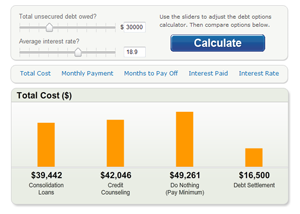
    There are many options when it comes to addressing your debt problems, and now you can compare them with Debtmerica’s Interactive Debt Options Calculator.

    Our easy to use debt options calculator, allows you to take a look at debt settlement and how it compares against other options such as credit counseling, debt consolidation or minimum payments. You’re able to compare Total Cost, Monthly Payment, Months to Pay Off, Interest Paid, and Interest Rate for each option in one easy to read interface. You’re also able to adjust your total debt and average interest rates to tailor our results to your situation.

    Try out Debtmerica’s Debt Options Calculator today and then speak with one of our professionally certified debt consultants to get started on your future free from debt!

  • How to Settle Your Debts On Your Own

    How to Settle Your Debts On Your Own

    A Step-By-Step Guide to Settle Debts On Your Own

    Settle Debt With Credit Card Companies

    If you cannot pay the minimum on your debts, it’s time for you to settle your debts. Debt settlement is a way by which you can negotiate with creditors/collection agencies to reduce your debt amount by 40-60%. If you enroll in Debtmerica’s Debt Resolution Program, professional debt consultants will guide you through the debt settlement process and our skilled negotiators will do their best to secure the lowest possible settlement. However, it is possible to tackle the debt settlement process on your own. This article will give you a step-by-step analysis on how to settle your debts yourself. Also, make sure to review our article “The Pros and Cons of Settling Debt Yourself”.

    (more…)